

Carbonara is a dish people throw hands over and somehow it only dates back to mid-century 1900s. That is correct, around the same time the slinky hit toy store shelves an Italian newspaper printed the first written carbonara recipe. Most food historians believe it was born in Rome in 1944, when American GIs liberated the city and handed out industrial quantities of bacon and powdered eggs, which Roman cooks turned into something delicious because, well, that’s what Italians do. Others swear it descends from charcoal workers in the mountains, with the cracked black pepper meant to mimic coal dust since “carbone” means coal.
Either way, authentic carbonara is a four ingredient miracle built on guanciale (cured pork jowl, not bacon), Pecorino Romano (not parmesan), egg yolks, and an aggro amount of black pepper. No cream, no garlic, no onion, and absolutely no peas… because every time someone tosses peas into carbonara an Italian nonna loses her wings.
The whole game here is heat management and getting the pasta hot enough to silk the eggs into a glossy sauce, but not so hot it turns into a demonic scrambled brunch. Once you nail this, you’ve officially made one of the most luxurious plates on earth out of 5 pantry ingredients.
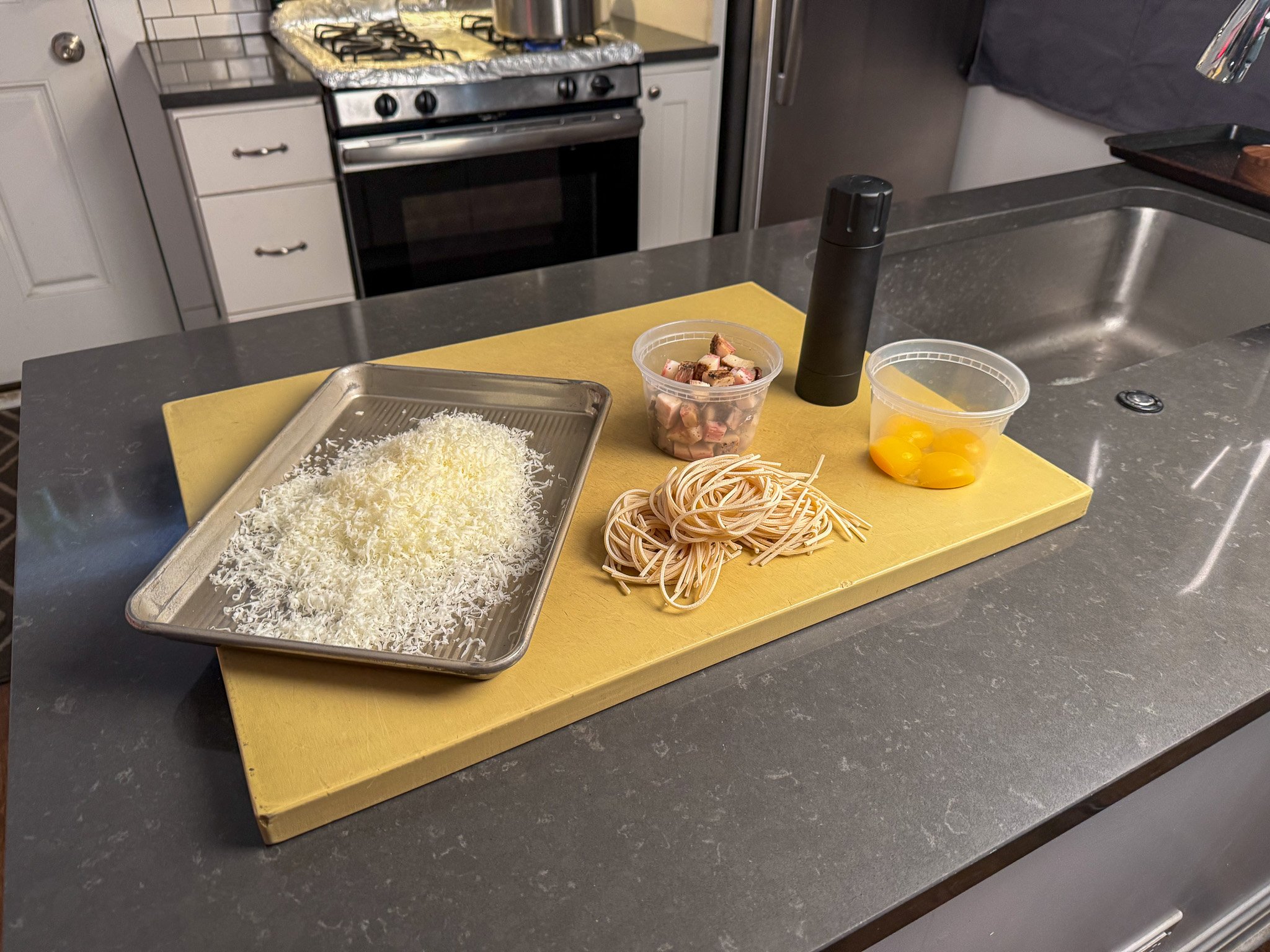
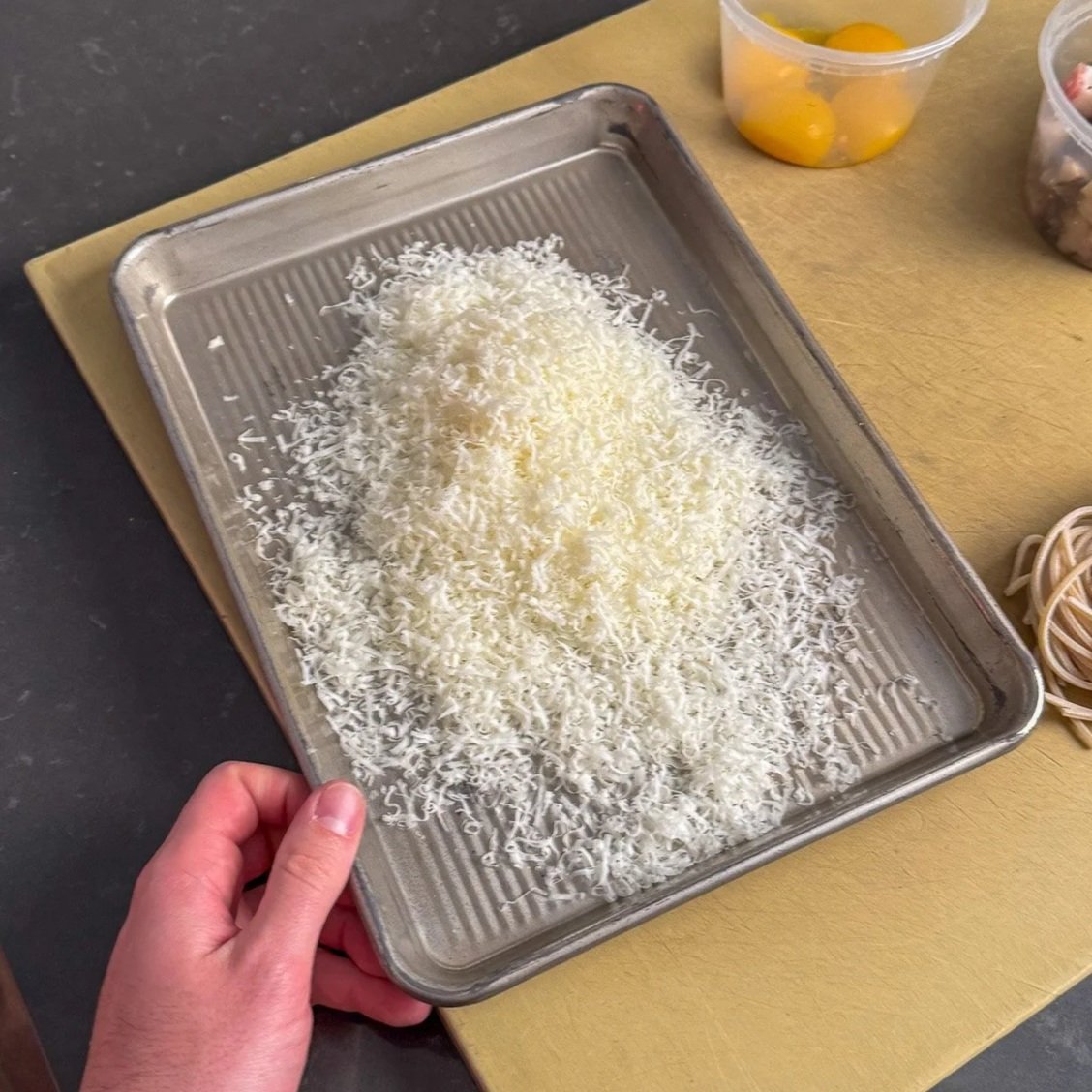
The ingredients are simple.
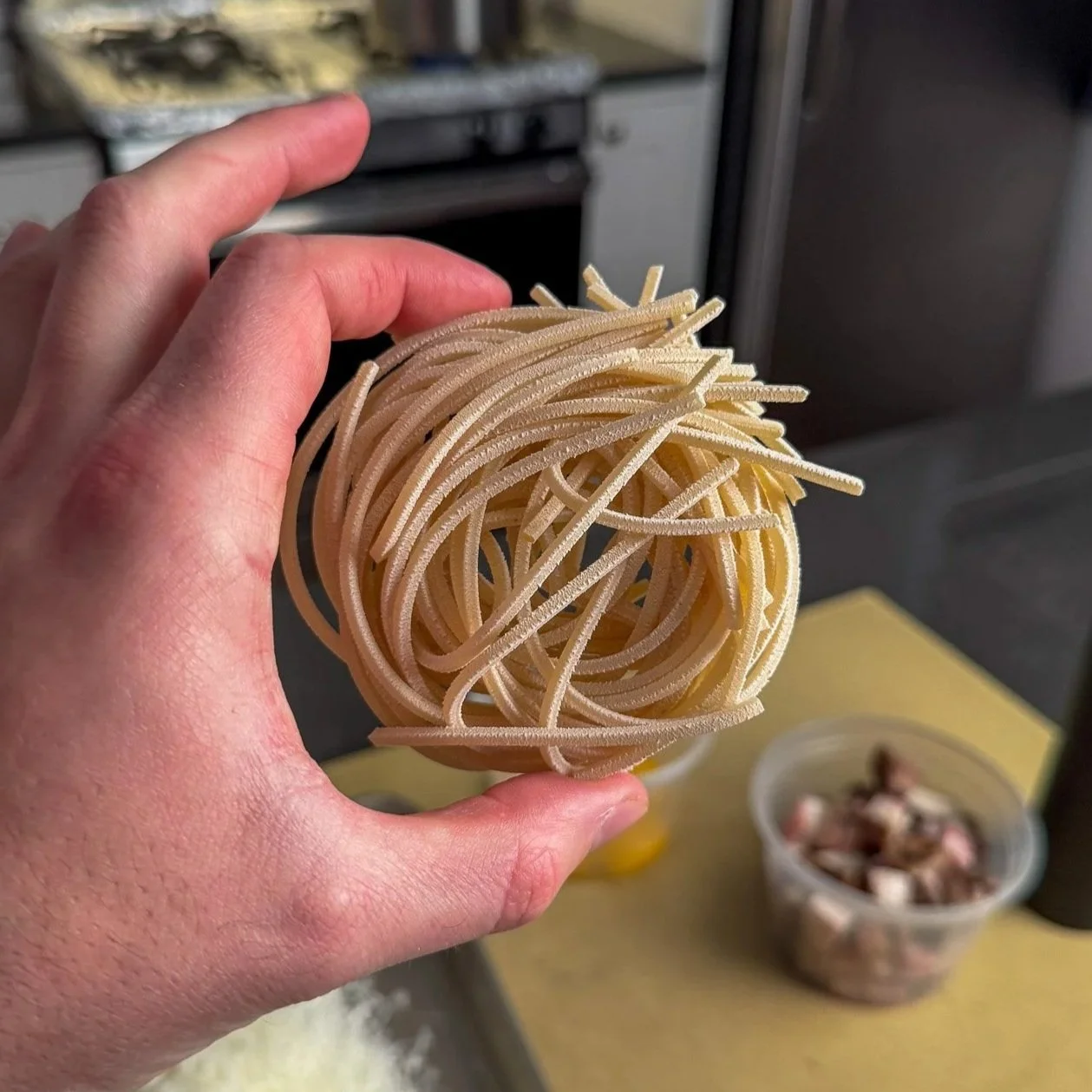
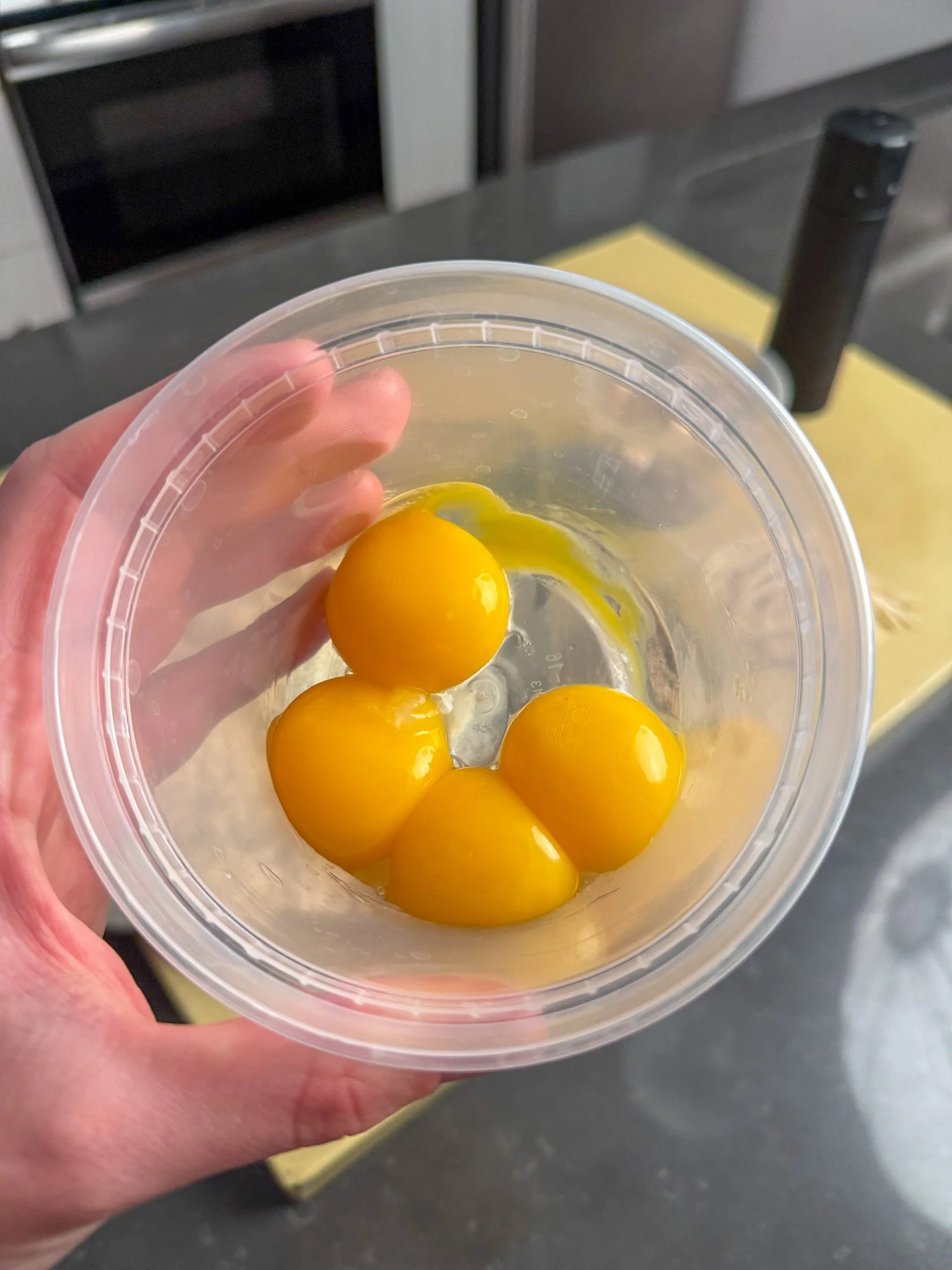
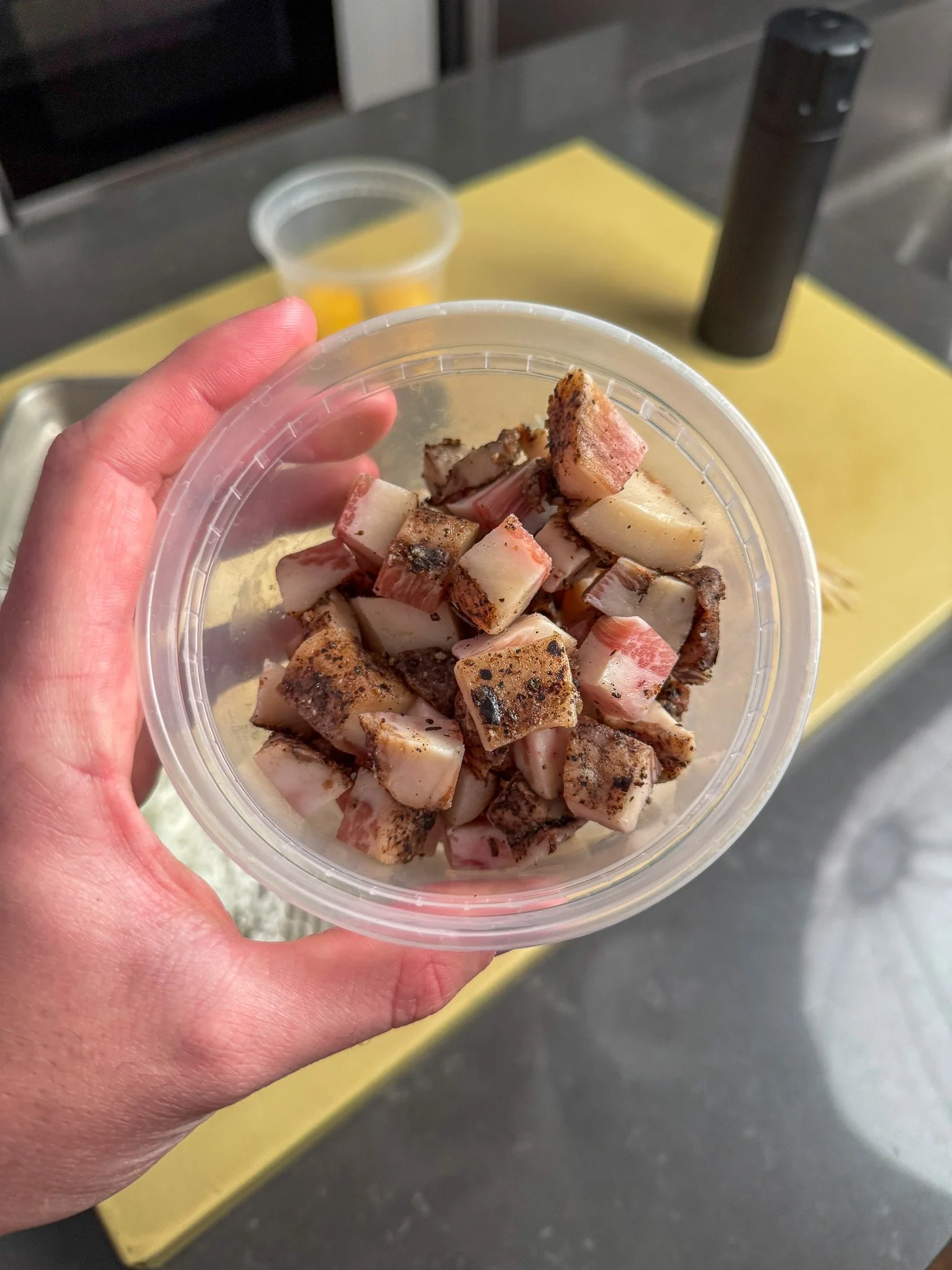
Stuff I Use...
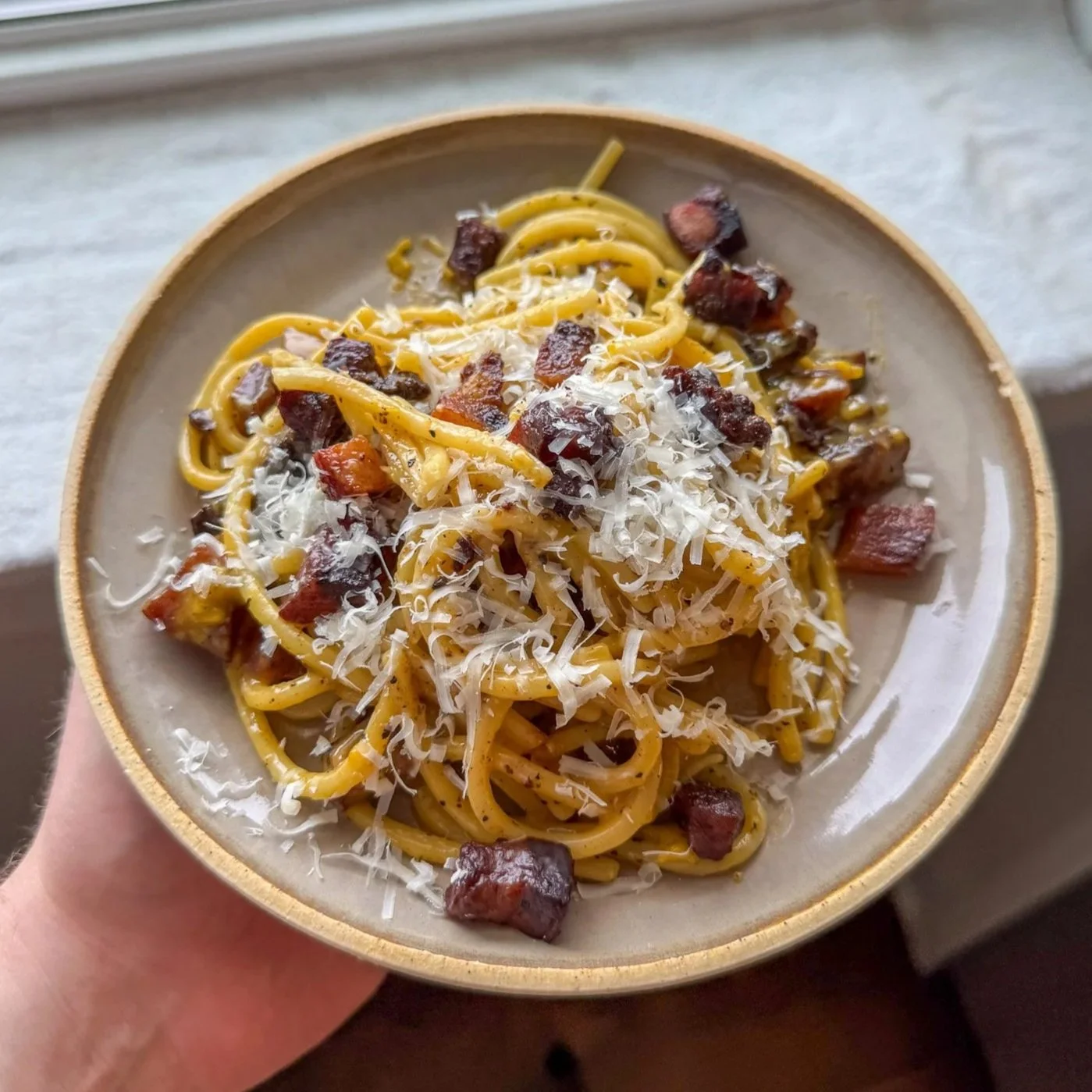

Carbonara
Ingredients
Instructions
- Fill a pot with enough water that a large glass or metal bowl can sit on top without overflow. Heat to 195–200°F (just below a boil — do not boil). Add the salt once hot.
- Trim the hard exterior from the guanciale and cube it — not too big, not too small. Add to a cold pan, then cook on medium, rendering slowly until browned and crisp with the fat fully released. Push the meat to one side, prop that side up on a wooden spoon so the fat pools, and pull off the heat to cool.
- In a large glass or metal bowl, whisk the egg yolks with the Pecorino Romano and black pepper until creamy.
- Set the bowl over the hot (not boiling) water like a double boiler. Whisk constantly until the sauce visibly thickens but doesn't scramble. If using a thermometer, target around 160°F and don't exceed it. Remove and let cool.
- Bring the water up to a boil, then cook the spaghetti to package al dente. Do not drain.
- Transfer the pasta straight from the water into the egg bowl. Add a few tablespoons of pasta water and a few tablespoons of the guanciale fat. Set the bowl back over the pasta water and toss with tongs, alternating on and off the heat to emulsify. Add more pasta water or fat as needed to dial in the consistency.
- When the sauce coats the pasta, fold in the crispy guanciale and give one final toss.
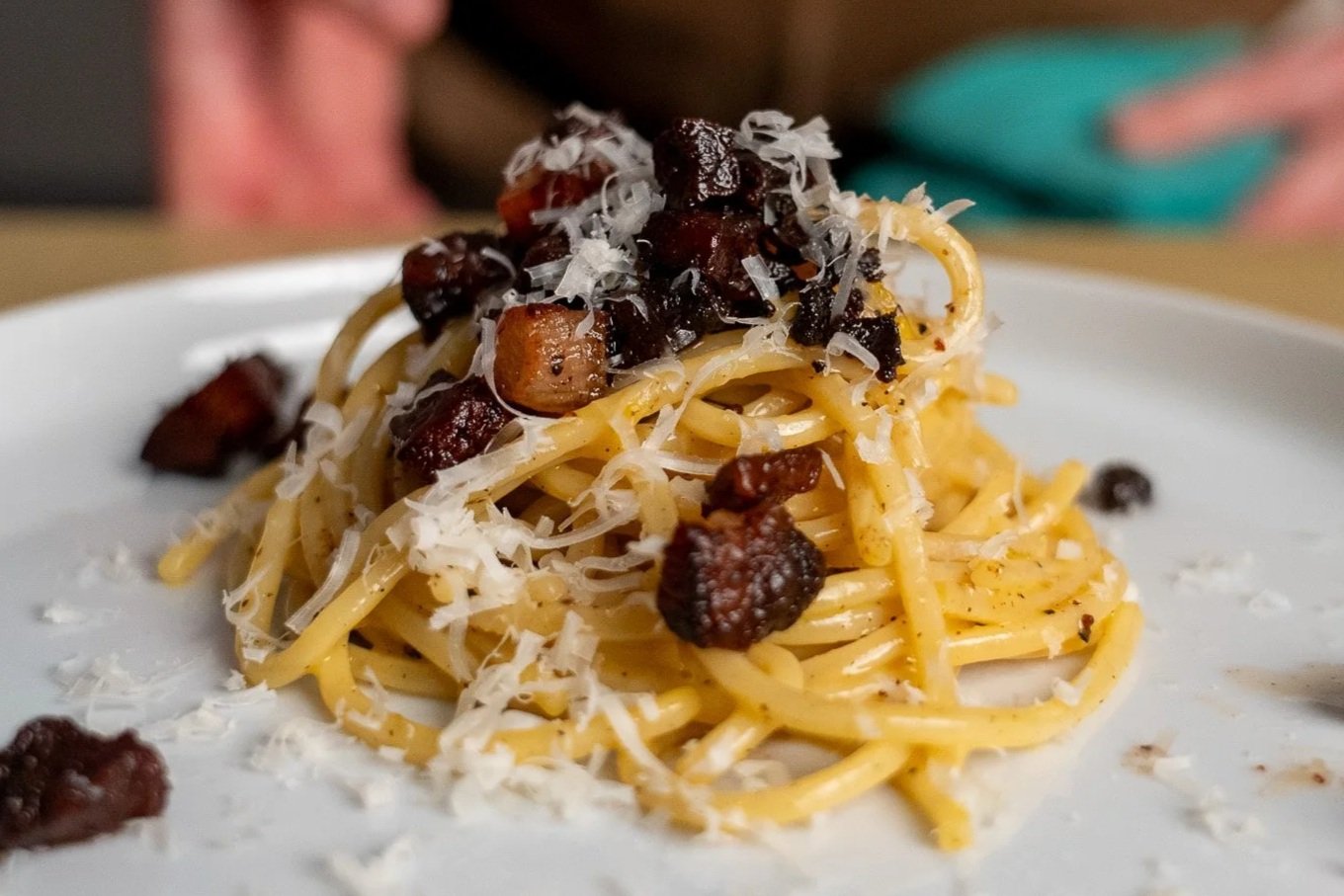
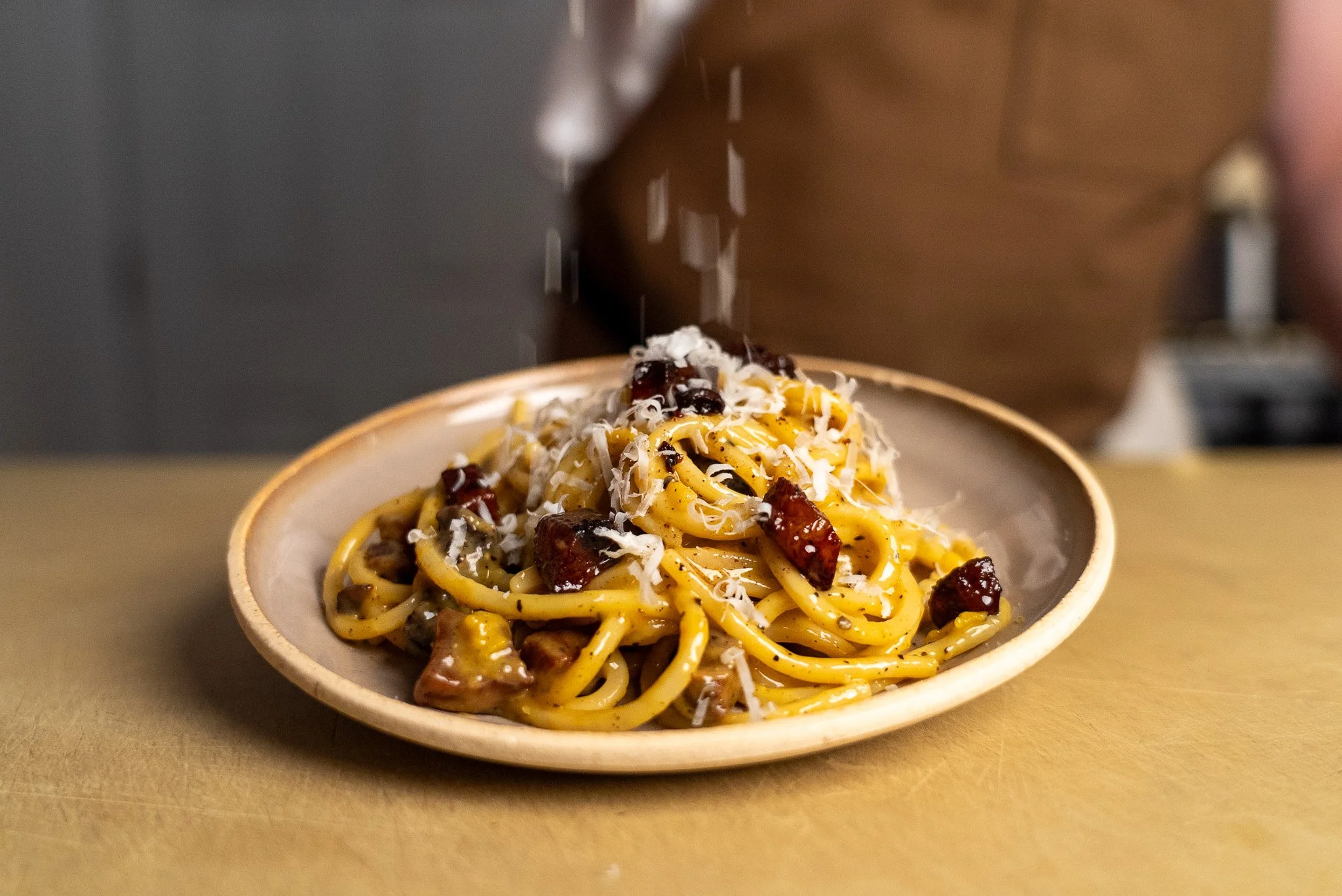
- Plate, dividing the guanciale evenly. Finish with more Pecorino Romano and black pepper. Serve immediately.
Disclaimer: I earn commission income with qualifying purchases made through Amazon’s Affiliate program and other affiliate links in this description.
